
1. Personal Protective Equipment (PPE)
-
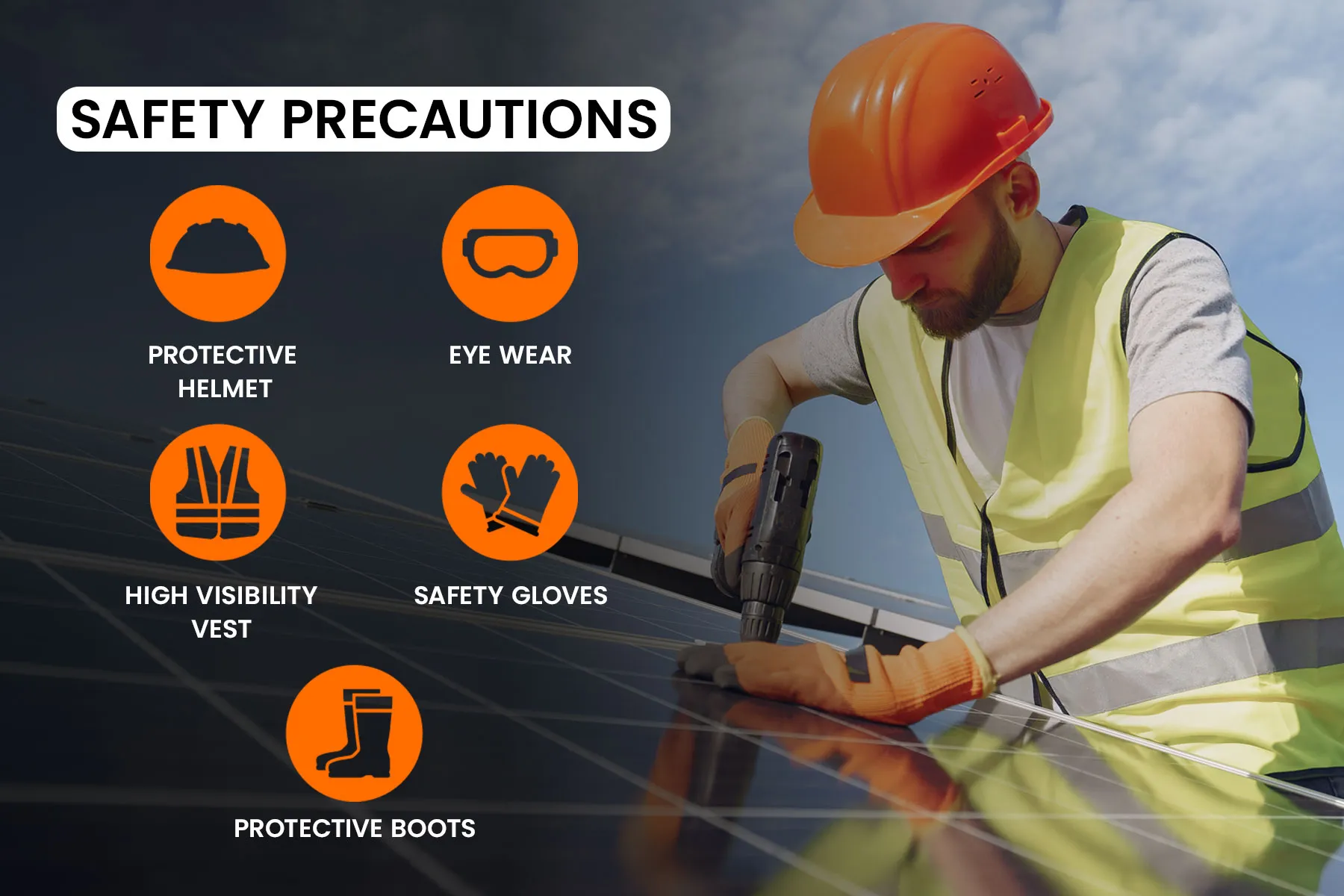
Head protection: Safety helmet to guard against falling tools or materials.
-
Eye & hand protection: Safety glasses and insulated gloves for electrical work.
-
Footwear: Non-slip, safety shoes suitable for roof surfaces.
-
Harnesses: Use fall-arrest systems when working at height.
2. Working at Heights
-
Fall protection: Install guardrails, lifelines, or anchor points before starting work.
-
Ladders & scaffolding: Ensure they are stable, correctly angled, and secured.
-
Weather awareness: Avoid installation during rain, high winds, or extreme heat.
3. Electrical Safety
-
Power isolation: Switch off and lock out all power sources before wiring.
-
Proper tools: Use insulated, rated tools and test equipment.
-
Correct wiring: Follow polarity markings; never connect damaged cables.
-
Grounding: Ensure proper earthing to reduce shock and fire risk.
4. Fire Prevention
-
Quality components: Use certified panels, inverters, and connectors.
-
Cable management: Avoid loose or pinched wires that may overheat.
-
Clearances: Maintain safe distances from flammable materials.
5. Manual Handling & Ergonomics
-
Team lifting: Solar panels are large and awkward—lift with help.
-
Correct posture: Bend knees, keep back straight, and avoid twisting.
-
Tool organization: Keep work areas tidy to prevent trips and falls.
6. Environmental & Site Safety
-
Secure tools/materials: Prevent items from falling off roofs.
-
Public safety: Restrict access to the work area; use warning signs.
-
Waste disposal: Dispose of packaging and damaged components responsibly.
7. Training & Compliance
-
Qualified personnel: Only trained individuals should perform electrical connections.
-
Code compliance: Follow national and local safety standards at all times.
-
Emergency readiness: Keep first-aid kits and emergency contacts accessible.
Key Reminder: Safety should never be compromised for speed. A well-planned, cautious approach protects installers, property, and the solar system itself.